
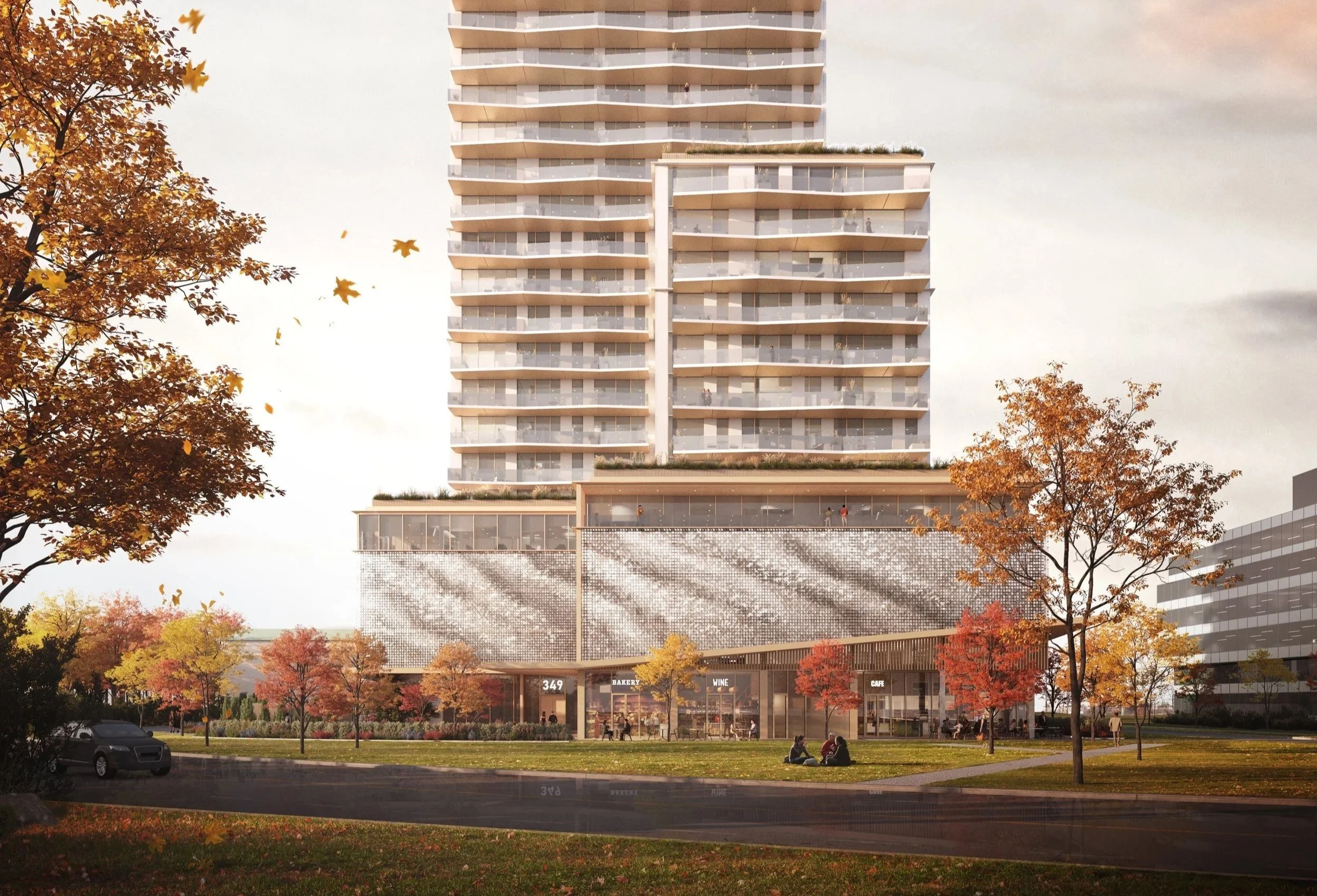
Mixed Density
Mixed Density is a comprehensive planning and design proposal developed in support of an Official Plan Amendment and Zoning By-law Amendment, shaped through close coordination with municipal requirements and long-term urban objectives. The project is conceived with an understanding of current regulatory frameworks while anticipating future patterns of density, mobility, and mixed-use development.
The proposal advances an integrated, multi-use community that balances environmental performance, social vitality, and wellness. Residential, commercial, and community programs are carefully layered to support contemporary patterns of living, working, and leisure, contributing positively to the surrounding urban fabric and broader city-building goals.
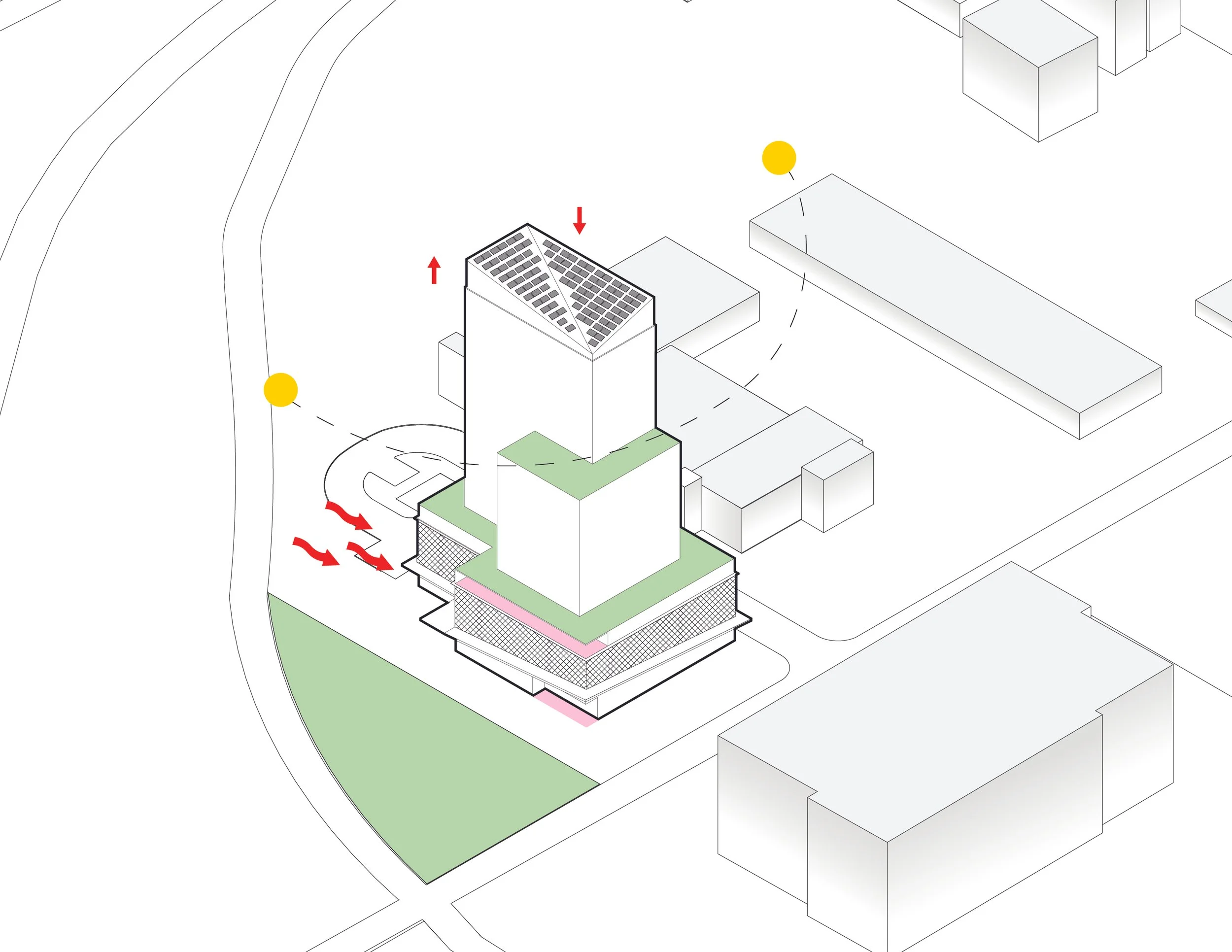
Sustainability is embedded at multiple scales. The building form responds to local climate conditions and integrates passive design strategies to reduce operational energy demand and embodied carbon. Durable, efficient material systems support long-term performance, with the capacity to incorporate renewable energy systems over time. Qualitative factors—natural ventilation, daylight access, and proximity to green space—are prioritized to enhance occupant comfort and well-being.
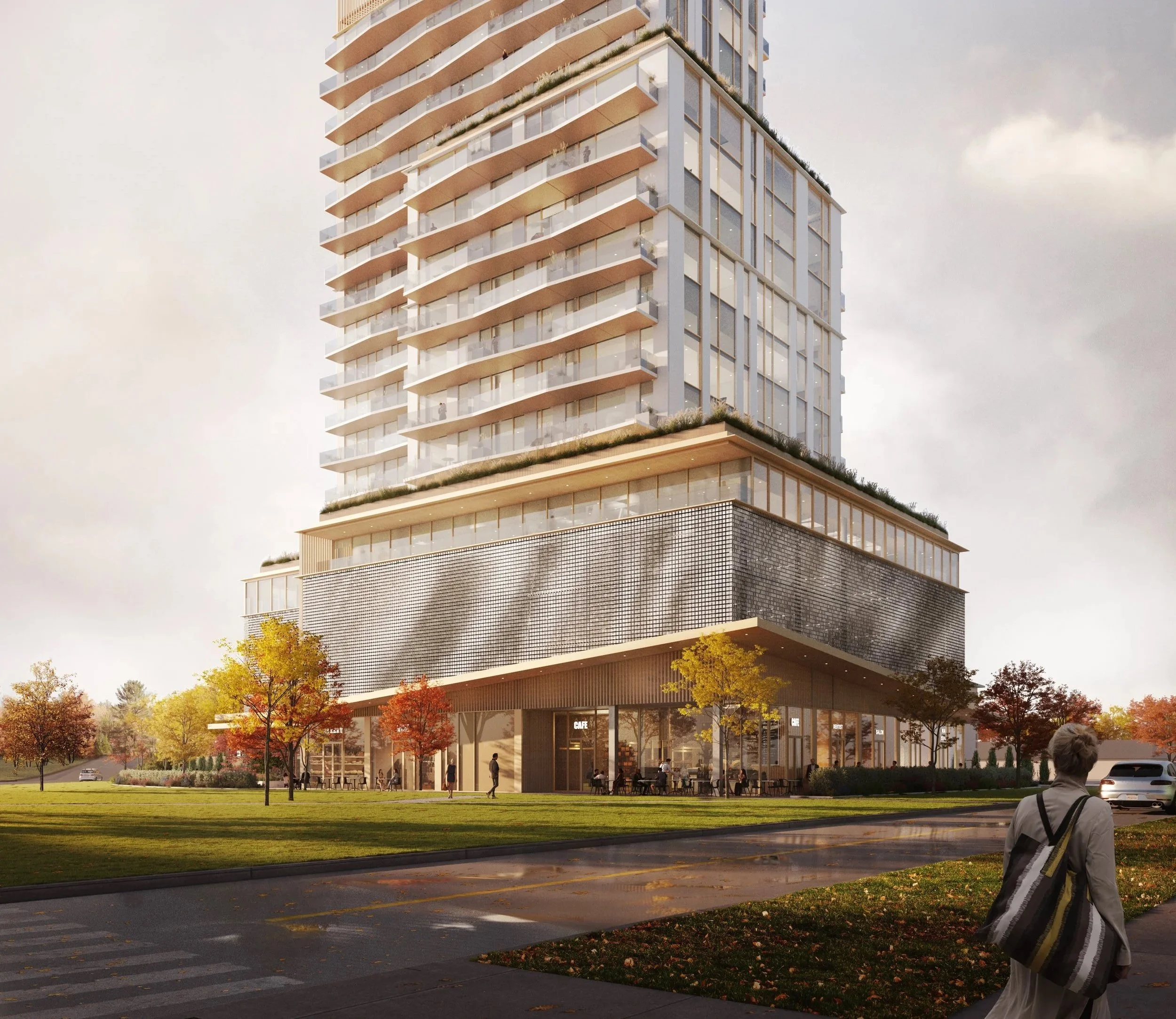
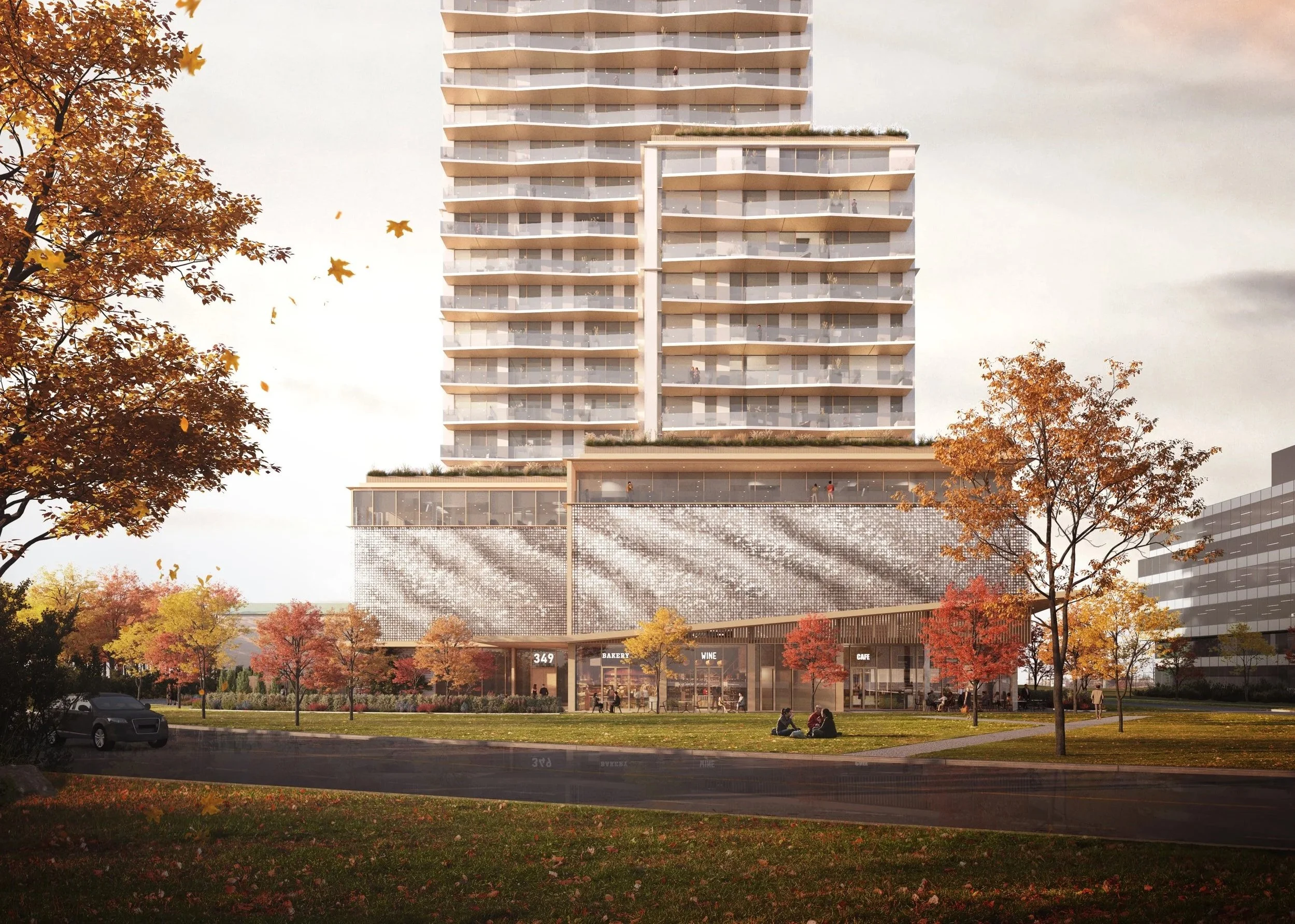
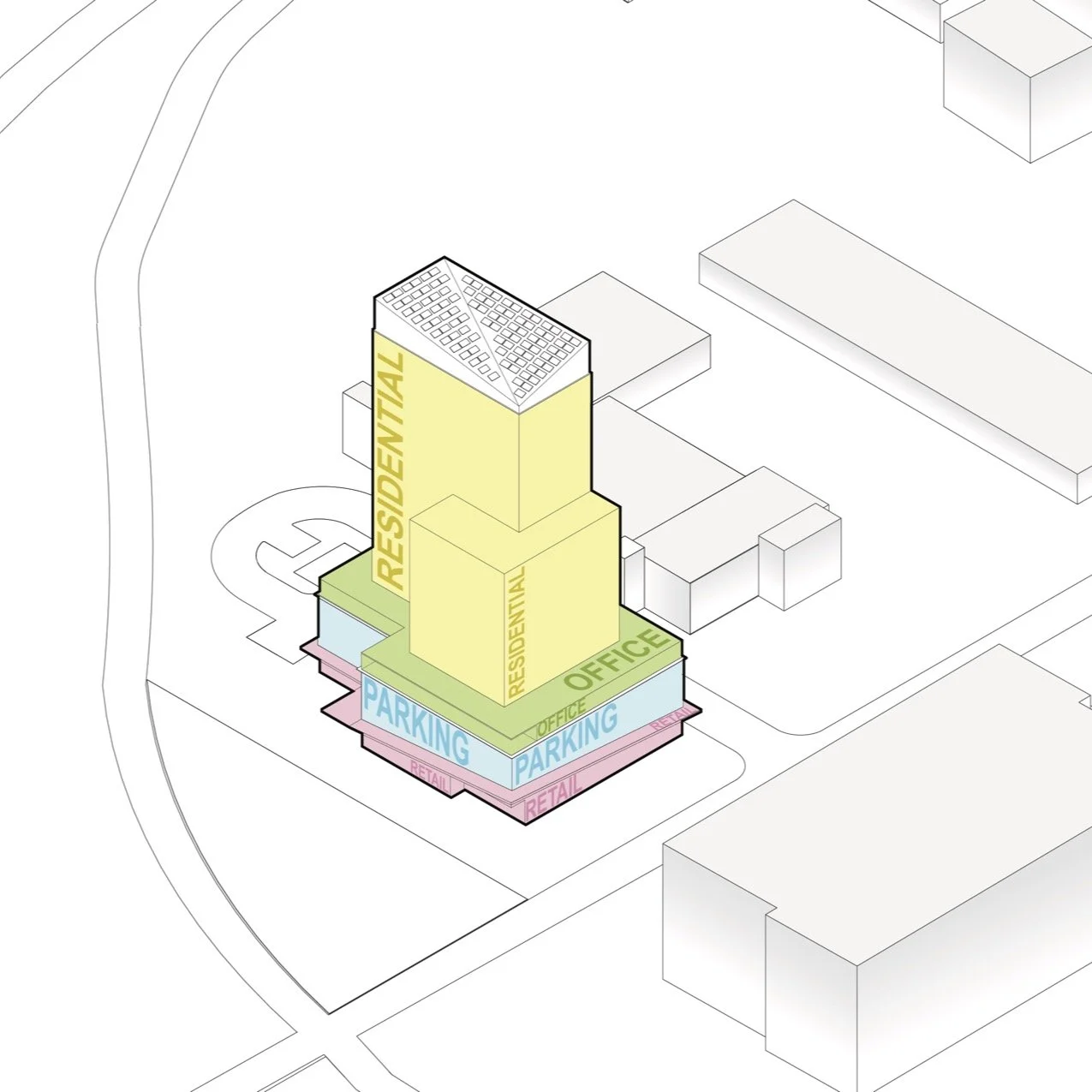
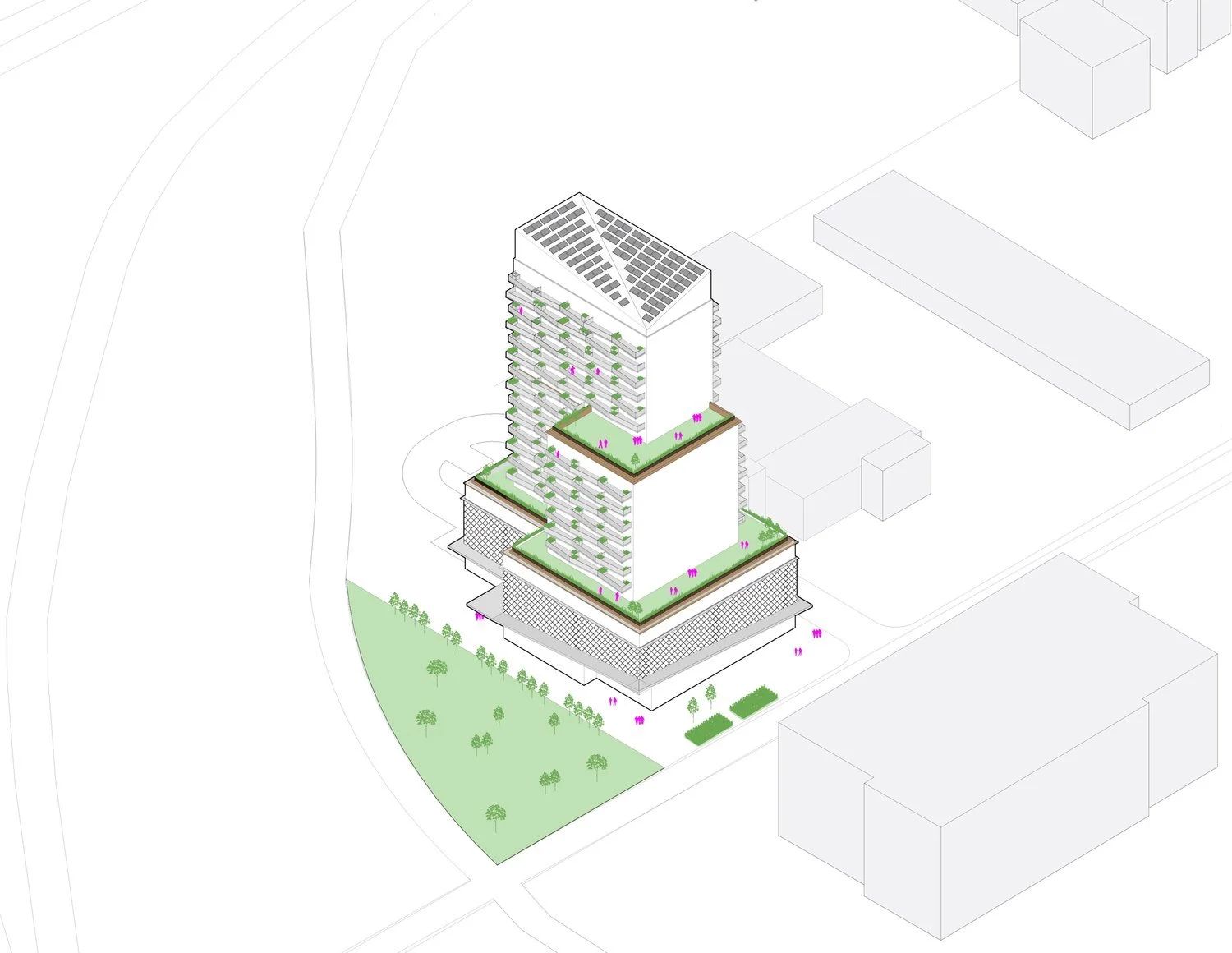
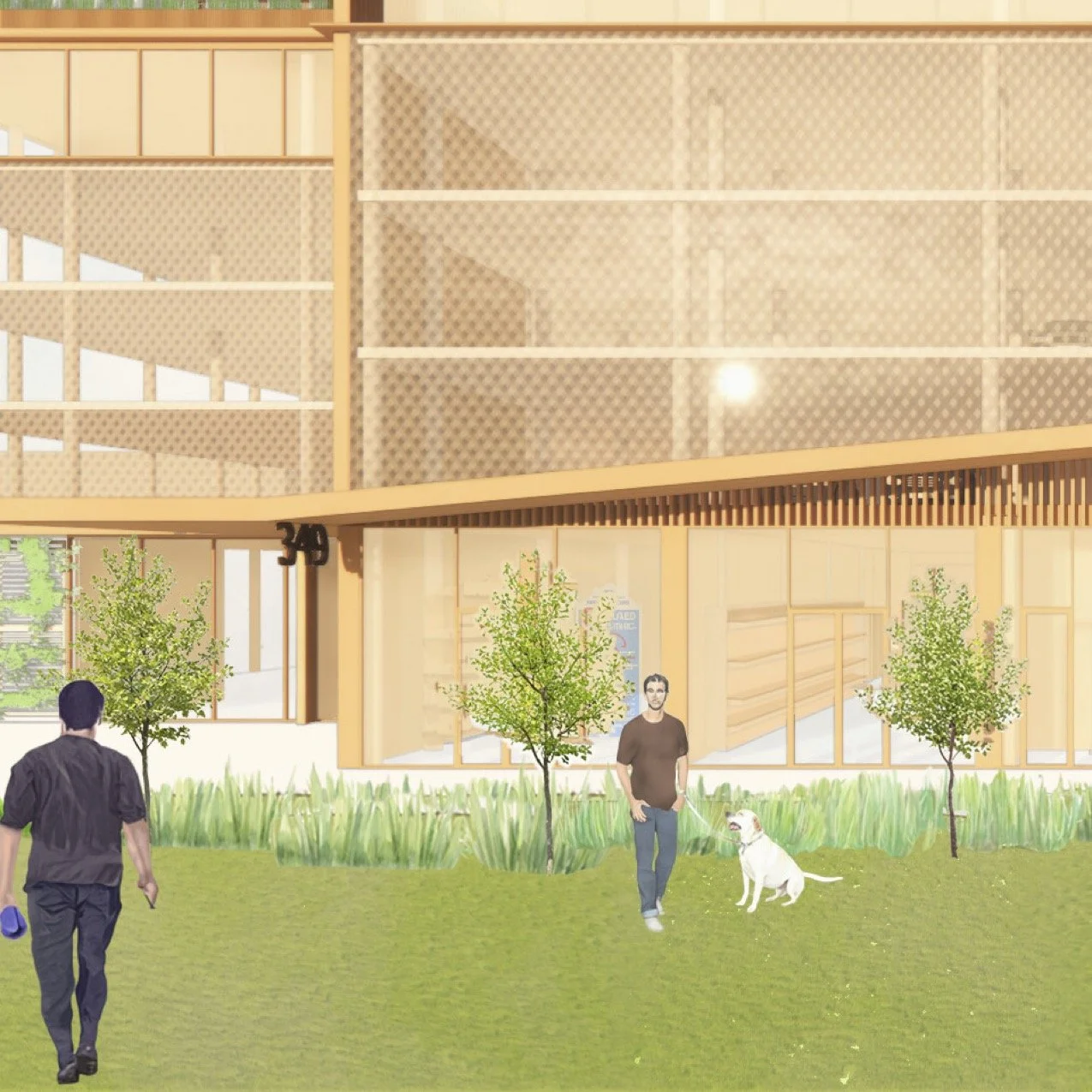
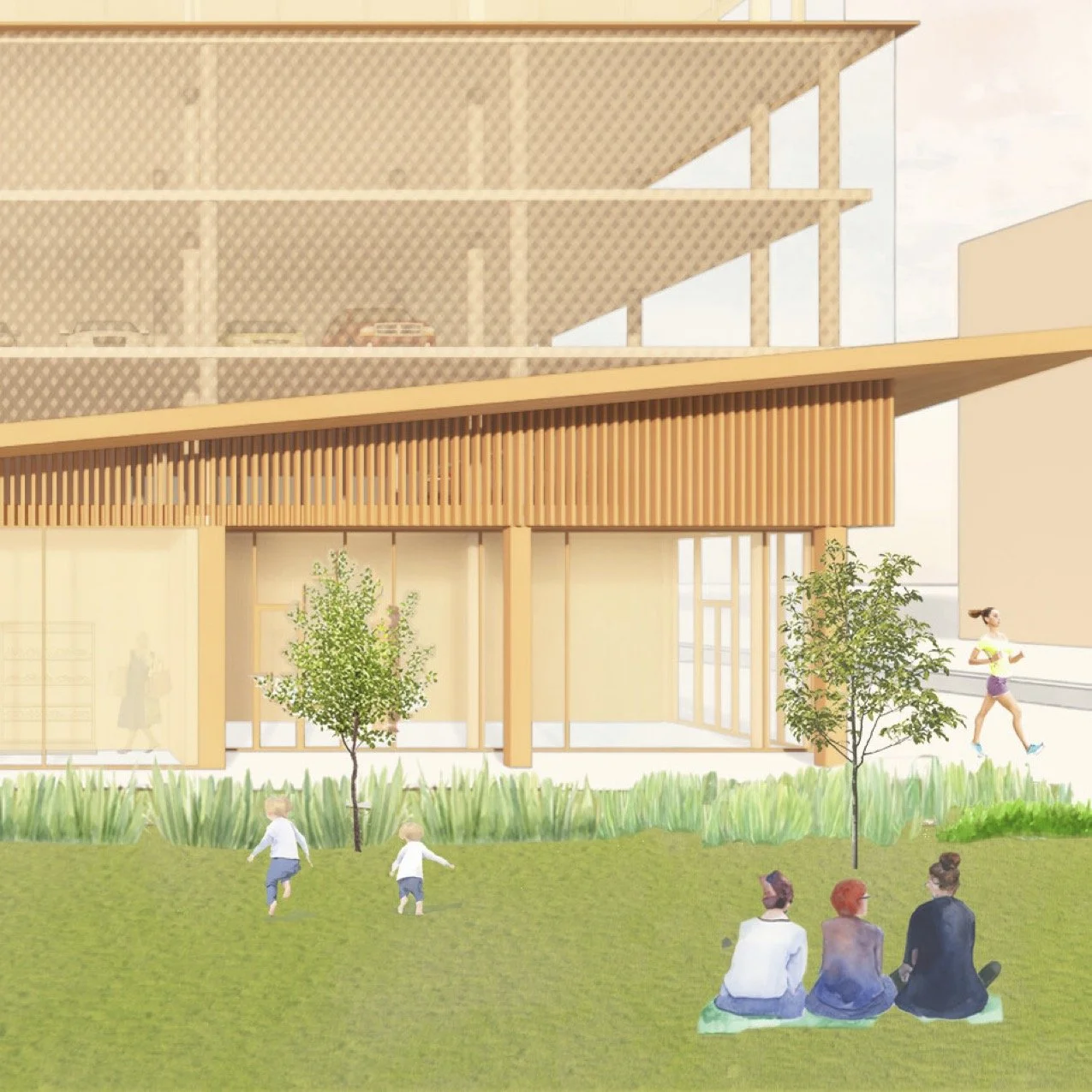
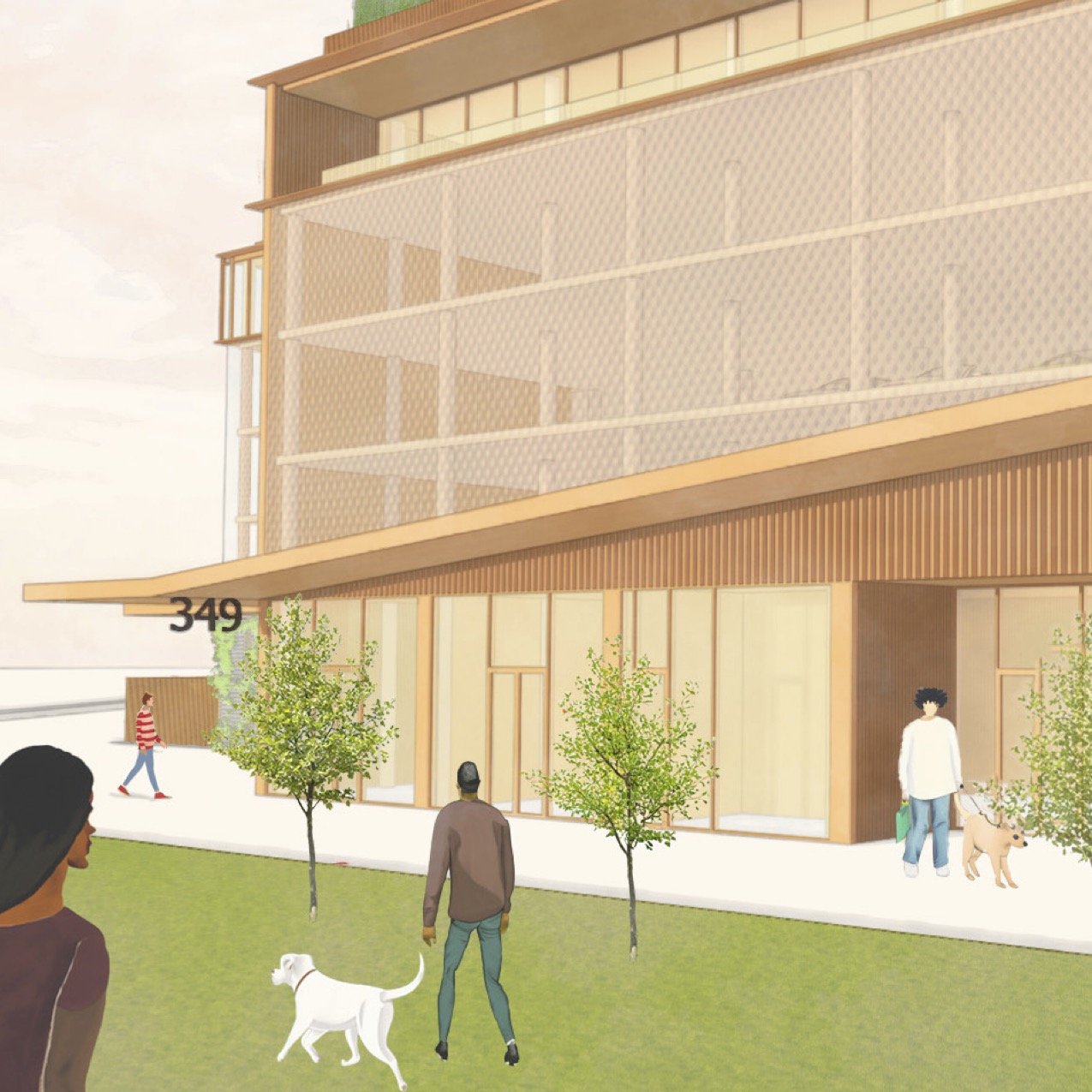
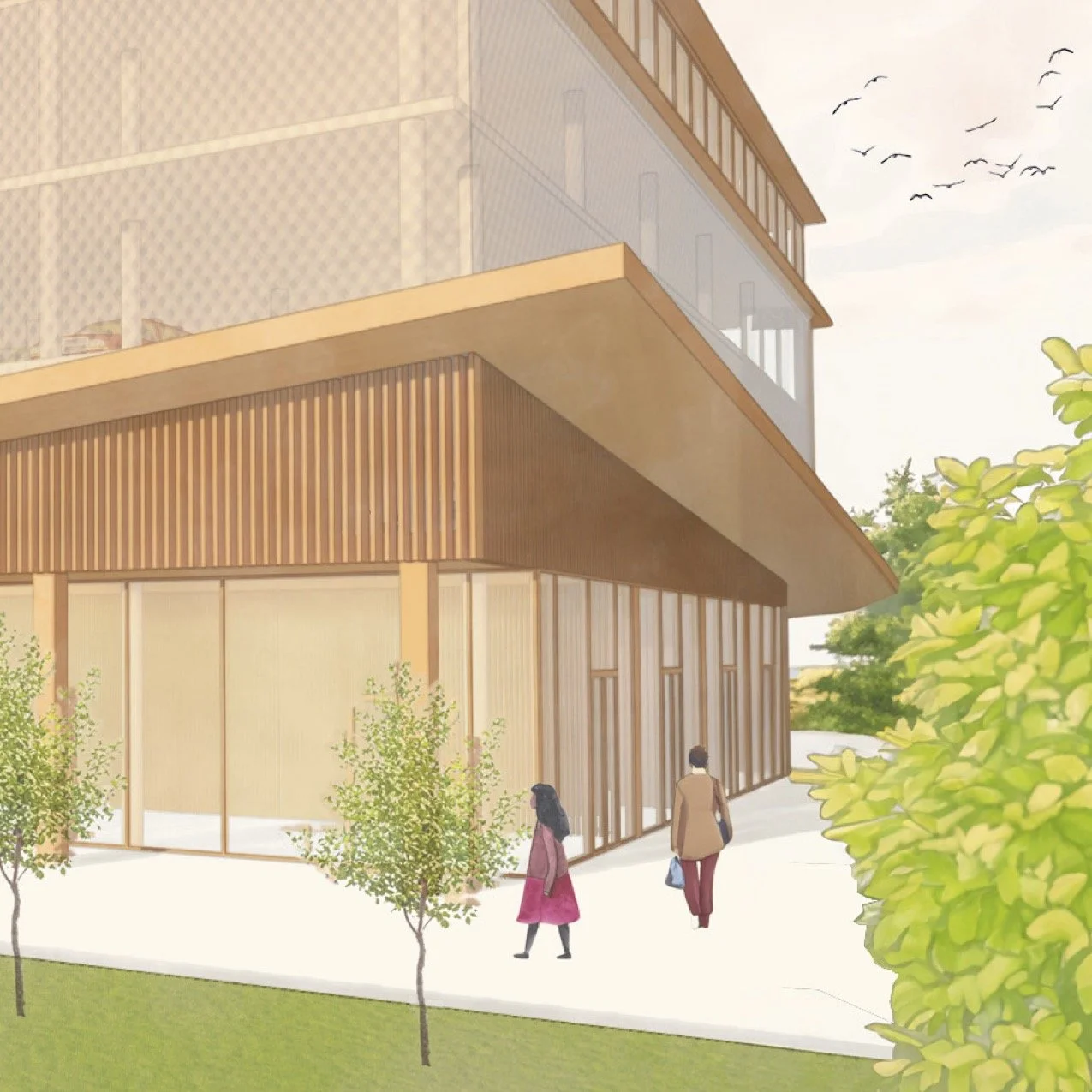
A diverse mix of public, semi-public, and private amenities activates the site throughout the day. Outdoor markets, shared walkways, and flexible gathering spaces promote social interaction and community engagement, while soft landscaping reinforces health, wellness, and environmental quality within the public realm.
Long-term adaptability underpins the project’s resilience. Generous floor-to-floor heights and a regular structural grid enable future reconfiguration as programmatic needs evolve, extending the building’s lifecycle and reducing the need for resource-intensive redevelopment.
Mobility and parking strategies are aligned with both current municipal standards and emerging urban trends. Subterranean parking is limited to two levels, supplemented by three above-grade levels to meet present requirements while allowing for future reductions in car dependency. As shared mobility and autonomous vehicle technologies continue to influence urban development, the project is positioned to adapt—reflecting shifts already underway in cities such as Toronto.